
- The Wider Constellation of Alivenesses: A Conversation with heidi andrea restrepo rhodes -
By Rob Macaisa Colgate
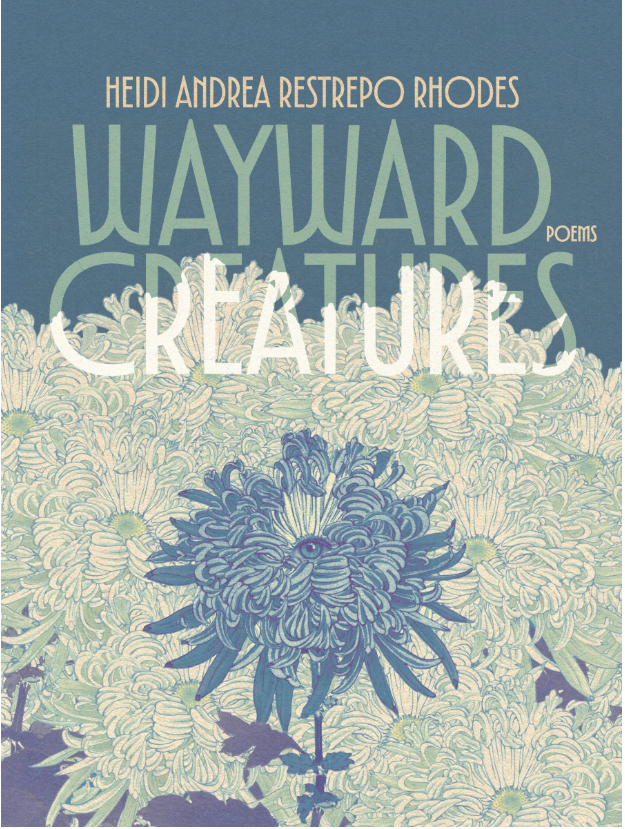
Slowly, sickly, and queerly, I had the chance to chat over email with the poet, artist, scholar, cultural worker, professor, and Foglifter contributor and guest editor heidi andrea restrepo rhodes. A queer, brown, nonbinary, crip/disabled creature like myself, rhodes and their work seemed almost too obvious to bring into my conversation with my own concerns. Even both of our recent releases feature the word “Creatures” in the title. Spooky stuff. So when I saw that rhodes’s Wayward Creatures was forthcoming from the fabulous, Austin-based Host Publications, I jumped at the opportunity for an interview. That said, I jumped in an incredibly sluggish, laggy, and unreliable way. What a gift of access intimacy, that heidi waited months for me to get my act together. Below is our correspondence. In the same way it was composed, I invite you to linger, lag, and wander through their words at your pace.
Rob Macaisa Colgate: Immediately from the title of this collection and its double epigraphs, we are situated squarely in creatureliness: this referring to not merely the animal, but all created beings and the status as created that unites us. The collection seems to organize itself around this essential unity. Even formally, with poems covering the page with fragments and caesurae, the book seems to define a shared landscape. What does a working definition of creature/creatureliness both look like and mean to you, both in and out of the poem?
heidi rhodes: I have never felt quite Human, and this has taken me down very rich and meaningful paths of reading and kinning with the strange, the creaturely, and the more-than-human, from the monstrous, to the ghostly, to the worlds of plants, animals, minerals, affects, intensities, and other various alivenesses. For me, the creature is the figure that is relegated to the outers of society because of the threat of our difference, our refusal to be easily taxonomized, our being given to puzzling normative imaginations regarding our bodies and their appetites, our ways of moving, our insistence on challenging the regimes of knowability with which Western Man has colonized the world and prefigured what the Human can be. This way of carrying creatureliness brings together a whole ramshackle cadre into potential solidarities. BIPOC, queer, trans, and crip/disabled people find something kindred with Frankenstein’s monster, banshees of local legend, spirits lingering between worlds, as much as alocasia and kestrels and wolves and the wind’s misbehaviors. In a way, the wayward creature as a concept is a redundancy, because I think the creature, at the core of its place in mainstream imagination, is an intrinsically wayward being. It’s refusal to belong within the boundedness of recognizable and domesticated life is what makes it more creature than not.
The poems themselves are both populated by the creaturely—more traditionally, there is Frankenstein’s monster, but also selkies, the caladrius bird, a troll reference…as well as a menagerie of animals alongside queer, trans, indigenous, black, crip/disabled, and other forms of life that have been disqualified as from the Human. I’m also somebody who relates to the world through what some call object-oriented ontology and new materialism, which is really an ancient materialism of indigenous knowledge: the sort of implicit animism in all things. Through this, forms we’ve been taught to view as without sentience or animacy invite us into their periphery, to know their animate life. Fire, or church bells, or cicada; coyote, dreams, a stutter, blood; peonies and lichen and potatoes, all are creatures here, too.
And, many of the poems also take on a creaturely form. I’m not sure I intended this latter bit from the beginning so much as it unfurled out of the writing process. Perhaps the unique creatures that are each poem were in their own raucous efforts of smashing out and breaking free from bondage to the suffocating terms of their existence on the page, of what counts as poetry (what counts as life).
RMC: Early in the collection, I was struck by one of your approaches to disabled ecologies, in which the lens get quite granular. The poems posit the world, the creature, and the human as the same on a particle or molecular level, which is undeniable. In your writing of the book, how did you navigate zooming your lens in and out?
hr: I love this question for how it leaves me asking, are they the same at the particle level? Can we have a carbon atom that is creaturely and another that is humanish and another that sounds like soil and earth as it leaps about in its specific kinetic motion? I am wondering about the impulse to find a molecular commonness that feels in stride with liberal humanism. Part of what I love about crip/disabled ecologies is that they refuse the need for an undeniable sameness to underly our existence and they understand that in our vast and wild differences is where our thriving will expand. But I think I’m less answering your question than appreciating the insight and play into physics that your question brought me toward!
Regarding zooming in and out, this is what is coming to mind: I think when we are in school, we are taught to pick a subject and stick to it. For example, your essay is about jellyfish, so you must stick to the jellyfish throughout, really get the microscope out over it, maybe look at the larger environment within which it lives, maybe consider the industrial pollution impacting different species—just stick to the jellyfish. You don’t add a paragraph about race cars or about Malcolm X amidst it all, your scope is jellyfish and nothing more. That is the “aboutness” of your essay. But as the authors of Crip Genealogies elaborate (and thank you to J. Michael Martinez for bringing me to this critique), “aboutness” operates through heteropatriarchal and ableist logics, surveillance, borders, and property regime, to regulate what counts, what is relevant to include, and what is disposable excess. We could even say the norms of aboutness are their own excision of creatures who threaten the cohesion of disciplinary territories as they’ve been maintained for hundreds of years. As Kandice Chuh mentions, this is not only ableist, but utterly racist and unqueer.
I tend to think in constellatory or galactic manner, through neurodivergent modes of associative leap and non-linear meaning-making. I see whole webs of connection. So if I’m writing about jellyfish, of course it makes sense to write about Medusa and the moon and Taoism and sublimity and gender non-conformity. And maybe this feels like a “zoom out” to some, or a loss of rigor somehow, but for me it is actually a deepening and widening of the field of sensing the larger ecology of existences, less a zooming in and out and more zooming through the electricity of everything touching everything. I see it as a very queer, crip, neurodivergent tuning in, (to return to the editors of Crip Genealogies,)to “transversal affinities” and “uncommon archives, unexpected coalitions…muted, but crucial presences.” And why shouldn’t the poem (and why shouldn’t we) find its (our) most thriving version of itself (ourselves) in this abundance of affinities and unexpected coalitions, these vital entanglements?
RMC: I think a lot of Tommy Pico’s Nature Poem and the frustration I feel resonates among many marginalized folks when it comes to nature poetry and its perceived disconnect from more urgent, material concerns. Yet Wayward Creatures struck me in how nature was written about as if it were the self (perhaps because indeed it is). The poems are not observational and analogued to humanity; they subsume human and nature to speak from lived experience. Tell us about your relationship to the concept of nature poetry.
hr: Yes! Thank you for that reflection and the shared disgruntlement with “Nature Poetry.” I share Tommy Pico’s critique and the reluctance to identify with Nature Poetry, which has historically been very white, and which feels different than queer/crip/black/brown ecopoetics. Pico’s concern (rightly so) has to do with the conflation of indigeneity and nature, the reproduction of the noble savage trope, and the denial that indigeneity can exist as urban. With crip experience, disabled, neurodivergent, and mad people are often denied entry into nature, our confinement to institutions and hospitals and the home, to private spaces, being part of eugenics histories in which society was organized around the notion that we should not be seen in public. We may have been banished to the forests, but were not allowed to access nature for the purpose of its enjoyment or the flourishing we might receive from relating with it, and mostly histories of ableism regarding nature are, I think, about our confinement and also the destruction of the planetary body in ways that further disable us. I love how Hanif Abdurraqib’s poem, “How Can Black People Write About Flowers at a Time Like This,” highlights the absurdity that those of us most impacted by historical traumas and the violence of the political present shouldn’t want to commune with beauty or the “natural” world, not only in spite of that violence but because of it, what it takes to face it. There is, I think, a solidarity to be found in the mutual care between us and the more-than-human world that includes writing about flowers at a time like this.
One of the big criticisms of Nature Poetry is its Human-centeredness, its anthropomorphism that projects human thought and character onto nature. I’ve been reflecting on the difference between that colonial tool and what Arturo Escobar, in writing about black river communities in Colombia, calls their relational ontology—that all things exist as themselves only in relation through an orientation to the world where there is no Human/nature divide, where all life all around is animate kin and relation, from the waters to the forest to the clouds to sun, tides, minerals. In my own neurodivergence and Colombian ancestry, this latter way of knowing the world has always resonated deeply for me. (It is part of what I adore about reading Opal Whiteley’s diary, too, and why I wanted to feature her in a poem in Wayward Creatures.) I sense a relational, ecological ontology in which my very being only is, because of all else I am in relation with. I don’t think I have ever felt a kind of pre-existing self attached to my body: the self emerges through the ecologies it is part of, across space and time. In that, I am never setting out to write a “nature poem”—I am writing my aliveness and my kaleidoscopic relations, and the existence that is “me” would not exist without that larger becoming-with, the wider constellation of alivenesses all around.
RMC: In the book’s engagement with queerness and transness, I found myself delighted by notions of monstrosity that presented themselves not as evils, but contortions away from order and towards actualization. At the same, I found myself considering the impulse to align queerness/transness with nature and how this might sometimes feel like a justification for something that need not be justified. What is unnatural, what is human, and must they be at odds? I don’t know what my question for you is here. I just feel this is a rich area on which I would to learn from you.
hr: I don’t think queer ecology’s purpose is to align queerness and transness with nature in the sense of saying, “our desires, our multiplicity of gender, etc., are natural”; nor is the purpose of crip ecology to insist that disabled bodies are natural. Though that has historically had its place in countering narratives about the alleged unnaturalness of our bodies and our orientations to the world, it has also fallen into liberal assimilationism that reproduces mainstream (ableist, heteronormative, cisnormative) models for being (i.e. WE are just like YOU, so treat us well! PLEASE! In fact, let us show you how MUCH like you we can be!) which usually amounts to proving how well one can still perform under capitalism. So no, (you are right,) there is no need to justify or entertain anything regarding whether or not we are un/natural, and therefore, whether or not we are to be feared.
Where I find queer/crip ecological resonance is in two places (at least!) When we understand through and through how deeply interconnected everything is, that nothing is separate from anything else—which is an essential principle of ecology as I understand it, and something we inherit from many indigenous knowledges—our love of and responsibility to any one being or place or thing means we are inherently responsible to everything connected to it, which, again, is everything. It necessarily shifts our ethical orientation to life and how we do relationship overall.
Secondly, my resonance with queer/crip ecology lies in the shared status as “less than human” and “too wild” that has been given to us as well as to the so-called “natural world.” We, as much as the forests and the sea and the mountains and the animals and the weather, etc., are met with the imperative to be contained, domesticated into heteropatriarchy, its gender binary, and its performance of ability as much as its impulse to cultivate land into private property. QTs, crips, and nature alike are a threat to order if we are not productive by the standards of capitalism and its endless accumulation. Histories of colonization and the orders of knowledge and power they’ve relied on have created and recreated the binary of natural/unnatural to justify the horrific kinds of violence done to many of us, our ancestors, and to the planet. The system relies on a notion that the Human is at odds with nature.
There is something freeing in embracing monstrosity as a way into, as you so beautifully put it, “contortions away from order.” (Please try it! Or as poet Hannah Emerson writes, “Please be with me great free animals.”) Get a bit feral, roll around in some mud, growl at the billionaires. It can be fun to be a monster. The actualization you name, I would qualify as not the actualization of fulfilling self-potential that gets lauded by neoliberalism; but the actualization of a more literal kind of making actual, real, taking what has been relegated to the mythological and letting the flesh take form. This feels relevant to so much anti-trans rhetoric circulating right now, which is insisting that anything outside of the gender binary is not real. In taking form as our weird, creaturely selves, we insert that difference into the world. But in taking form, I think, we must always be at the ready for further contortion as the order also reconfigures and tries to capture us. We know this. We have long histories of fluidity. QTs and crips and “nature” or more-than-human life, are geniuses at shapeshifting, and this scares a lot of people.
RMC: Throughout, there is an utter richness of language. I often think of poets as painters, some painting realist portraits, others imitating Twombly and Pollock with abstraction. Wayward Creatures, in my reading, creates its own space between these two approaches. Talk about your approach to language, description, and committing to lushness in a culture that is rapidly moving towards both thinness and slop.
hr: In working with Host Publications on Wayward Creatures, with my incredible editor, Claire Bowman, as well as publisher Annar Veröld-Miranda who designed the cover, I learned so much about my own relationship to language. Both of them understood and encouraged my surrealism, my maximalism, my queer erotics, my intellect, and that was an immense gift through the editorial process. It isn’t to deny the power of minimalism and short form, the potency of the unsaid. There are just different ways into an experience, and mine tends to be long form and deep in the intensities of multilayered archives (traditional and not) and synesthetic sensory abundance. Feeling intimacy all around. I find kinship with the anticolonial surrealists and their sense of the marvelous as a state of mind and method to smash out of the hold of Rationality’s grip on the real; as well in the Aesthetic Movement of the 19th century, which sought a return to beauty for beauty’s sake in response to the Industrial Era’s cold starkness pervading the visual sphere. I have more than once been told my academic work is too poetic and my poetry is too difficult and theoretical and abstract. While I strongly disagree with both of those claims, it has been painful to be missed on both sides of that coin. But that Host only asked me to be more of myself and sought to be in dialogue with that more of me, by way of study as a collective practice, was not something I’d received in publishing work before. To be closely read like that, toward a collaborative effort in stewarding a book into the world, I’m still pinching myself! I got that much freer in the process.
In writing with the lushness you name, maybe I am trying to bring you into my world some, to show you the world through my peculiar existence, partly because from where I’m positioned, the universe is truly a thing to behold. I don’t think it is a coincidence that the technocratic thinning out of language has increased alongside the rise of fascism, heightened alienation, and a collective dulling of public sense(s) through overload of both information and brutality. These things all serve each other. In the lushness, I am fugitive to these forces. I feel so many things alive and vibrant and wondrous. Somewhere in my core I am reaching for readers to say, “feel it with me, too. This thing of living.” And, “aren’t these things still worth noticing?” And, “despite the terrible things unfolding, isn’t there still so much luminous and worth our widest eyes?”
RMC: Foglifter was lucky enough to publish your poem “Dream in which the mythical caladrius prognosticates by my bedside.” Tell us about this poem: where did you hear of the myth, how did find its way into a poem, and what happened as you built out the poem?
hr: Thank you for publishing it! I think I had an afternoon of curiosities toward what mythological creatures have been associated with illness and healing across different cultures, and how familiarizing with those narratives and creatures might shift something about how I relate to my own chronic illness. There are many, it turns out! I loved the way “caladrius” sounds in the mouth, in the ear, it pleases my senses very much, so I went down that Roman/medieval meander. And, as somebody whose illness is somewhat idiopathic both in origin and prognosis, I wanted to complicate the traditional caladrius story in which the bird’s behavior is interpreted as an either/or of: be cured from disease, or die. I wondered what the caladrius bird would do sitting on my chest or at my bedside, in the indeterminacy of illness’ chronicity. I am not someone who needed two decades of being gaslit by doctors to lead me to the magic and medicine of birds, I was already there. The poem then becomes also about anticolonial epistemologies and the intimacies they make possible when the EITHER/OR orientation of this world leaves us bedbound and often isolated. In becoming the bird through the poem, I’m in my desire to alleviate the suffering of others while also taking part in the creaturely refusal of preconfigured fates for any of us. I’m nodding to José Esteban Muñoz here when I say it is to cultivate instead, the crip/sick not-yet and its many possible horizons.
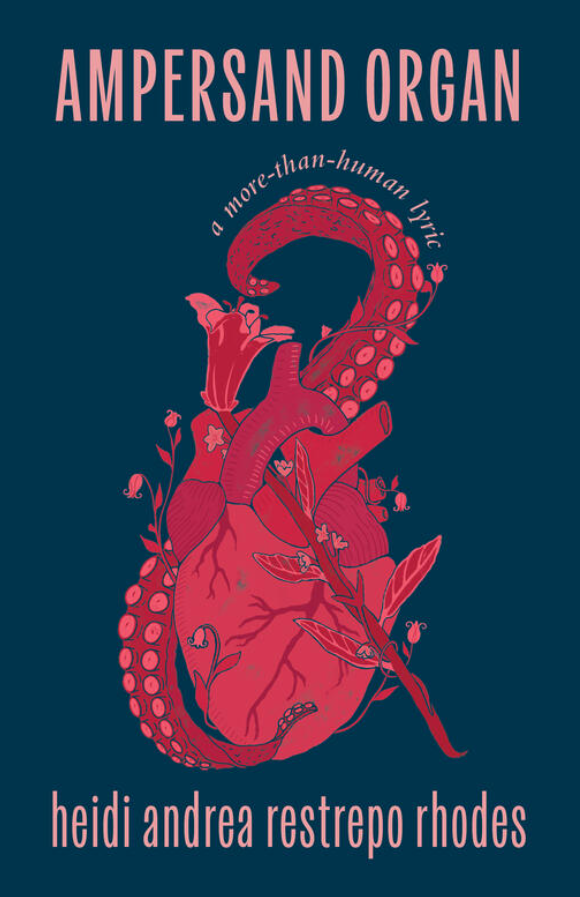
RMC: It was a delight to see this book ending on an ampersand, given that your collection Ampersand Organ: a more-than-human lyric is forthcoming with Milkweed’s (iconic) Multiverse series this August. Tell us about this next book!
hr: I love that you noticed that link between the ending and the next book. It is not coincidence. I spent many months in studied company of and becoming with the ampersand and its deconstructive openness. Such a tiny sign that does a massive amount of work. Ending Wayward Creatures on the ampersand is a refusal of closure and enclosure, and that refusal led me into the beginnings of putting Ampersand Organ to page. I love Milkweed’s Multiverse series and what its editor, Chris Martin, is doing with it. If you can imagine a whole library of “neurodivergent, autistic, neuroqueer, mad, nonspeaking, and disabled” poetry that is reshaping what language can do, what a book and literary culture can be, the Multiverse series is that. This has been important to so many of us because, as Remy Yergeau reminds us in their book Authoring Autism, mainstream ableist notions of who can author, who can write, and think-feel-sense in meaningful ways, have historically excluded those not identified as neurotypical. To riff on Audre Lorde, we were never meant to survive, let alone be poets.
For years I have carried aracelis girmay’s line “& isn’t the heart / an ampersand” with me, with some sense that it was calling me into a deeper foray. From that line, I first used the phrase “ampersand organ” in a poem eight years ago, and the meat of it has stuck with me. That was the seed for the book, which is difficult to summarize, as it is rhizomatic and extends into its own beyonds beyond the page. Attempting to summarize it actually feels antithetical to its spirit. Again, the crip critique of aboutness resonates. But I can say it is the freest and weirdest I’ve ever let myself be in writing a book. It is a kind of unmasking—in reading it you are glimpsing the multiverse inside me; I am offering my heart. The book expands the “neuro-” of neurodivergent beyond the anatomical brain, to understand the neuro- is about the heart, the stomach, and the larger nervous system, and that that is something not contained by the skin and bounds of the body, but woven with the everything everywhere all at once. The book as a complex soma carries the “&” in so many ways—as body, as history, as citation, as ecotextual and echotextual haunting, as the proverbial heart which loves and grieves and reaches for, as an ethos and ecology of being inseparable from all life, as the indeterminacy of quantum physics, a way into the ecstatic, as a metaphysics of always-more-than-one, a neuroqueer way of knowing and praxis of neuroqueer poetics, an animism of and intimacy with the more-than-human, an erotics of sensual excess, a political, anti-fascist, anti-imperialist, queer/crip commitment to “anding” which is to say, not only the refusal of closure and enclosure, but a fugitive and ever-metamorphosing aliveness and turn toward not-knowing and the not-yet-determined. A reminder that we are always in the throbbing middle. An appeal to gather there for some fugitive planning and liberatory, worldmaking shenanigans.
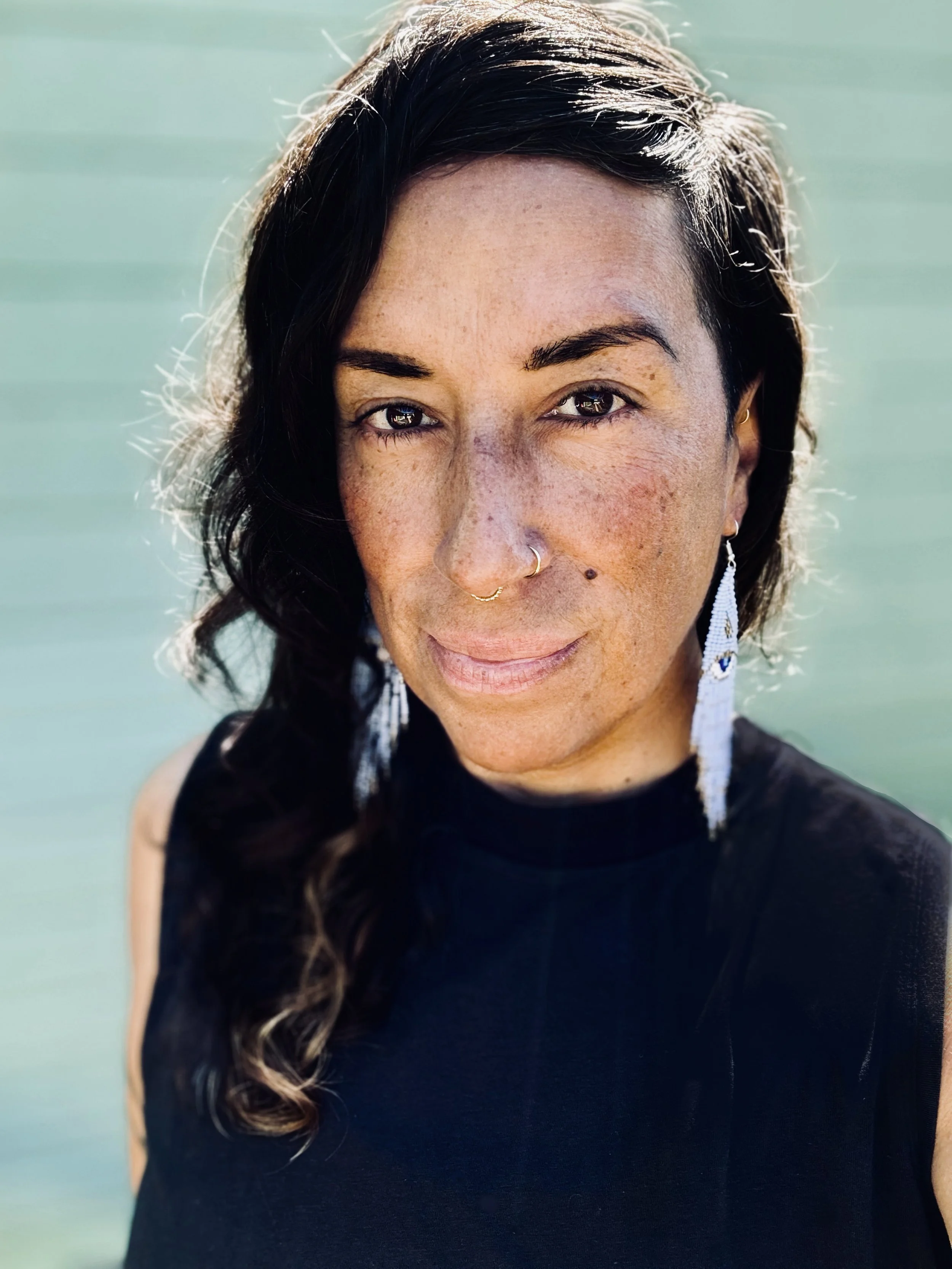
heidi andrea restrepo rhodes is a queer, non-binary, crip/disabled, brown, writer, artist, scholar, educator, cultural worker and creature of the Colombian diaspora. They are author of The Inheritance of Haunting, Afterlives of Discovery: Speculative Geographies in the Settler Colonial Imaginary, Wayward Creatures, and the forthcoming Ampersand Organ: a more-than-human lyric. They are a professor of feminist, queer, and disability studies; and poetry co-editor at Apogee Journal. Their poetry and creative non-fiction have been published in American Poetry Review, The Normal School, Michigan Quarterly Review, Alocasia, Poetry, and Waxwing, among other places. They live in southern California. ig: @vessels.we.are
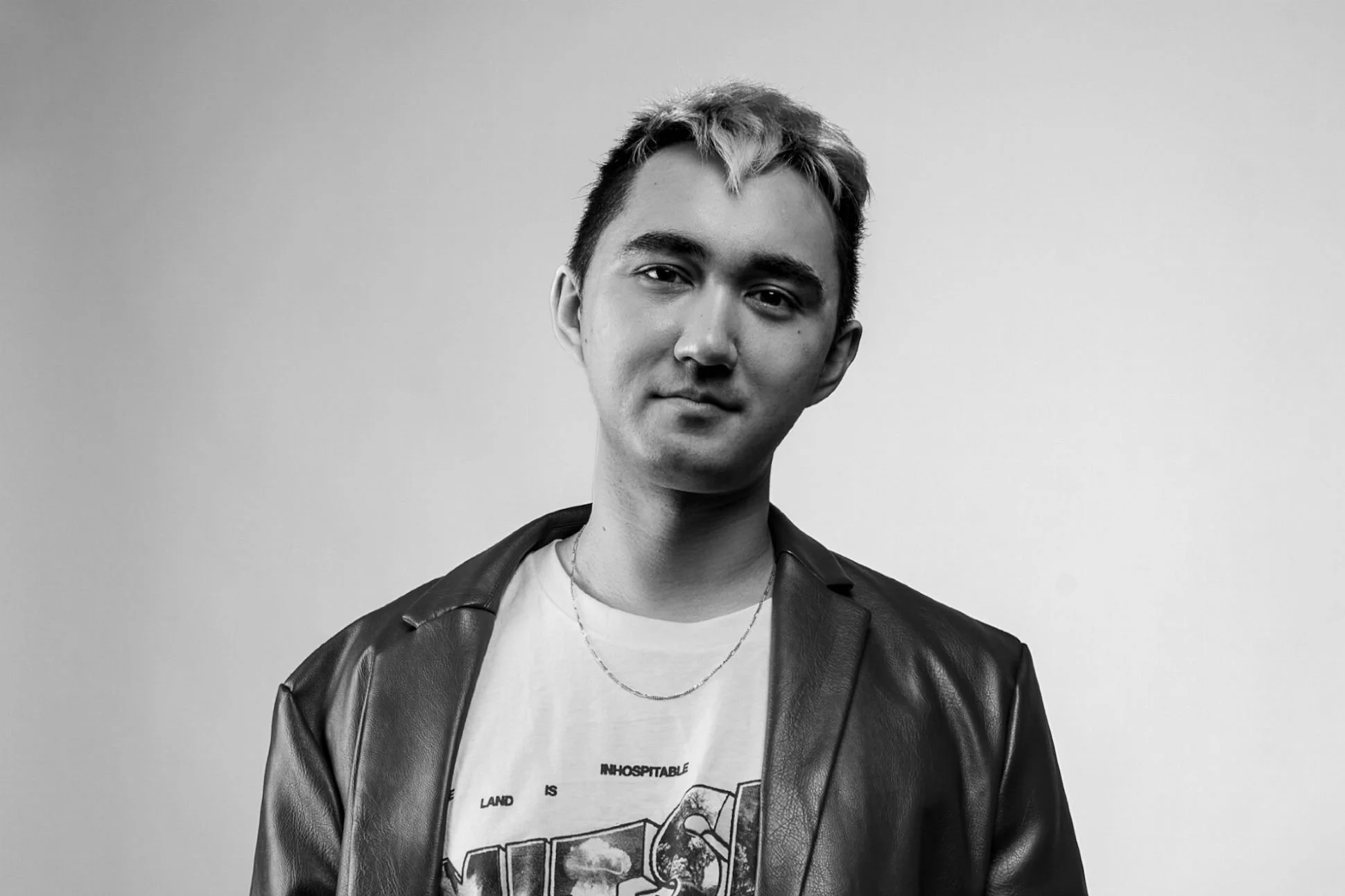
Rob Macaisa Colgate (he/she/they) is a disabled bakla poet and playwright. A 2025 National Endowment for the Arts and 2024 Ruth Lilly and Dorothy Sargent Rosenberg Fellow, he is the author of the poetry collection Hardly Creatures (Tin House, 2025) and the verse drama My Love is Water (Ugly Duckling Presse, 2025). His work appears in Best New Poets, American Poetry Review, Poetry Daily, and Poets.org, among others, and has received support from MacDowell, Fulbright, Lambda Literary, Sewanee, and Kenyon Review. The inaugural poet-in-residence at Tangled Art + Disability, he received an MFA in poetry and critical disability studies from the New Writers Project at UT Austin.