
- A Conversation with Evan Kennedy -
By Noah Ross
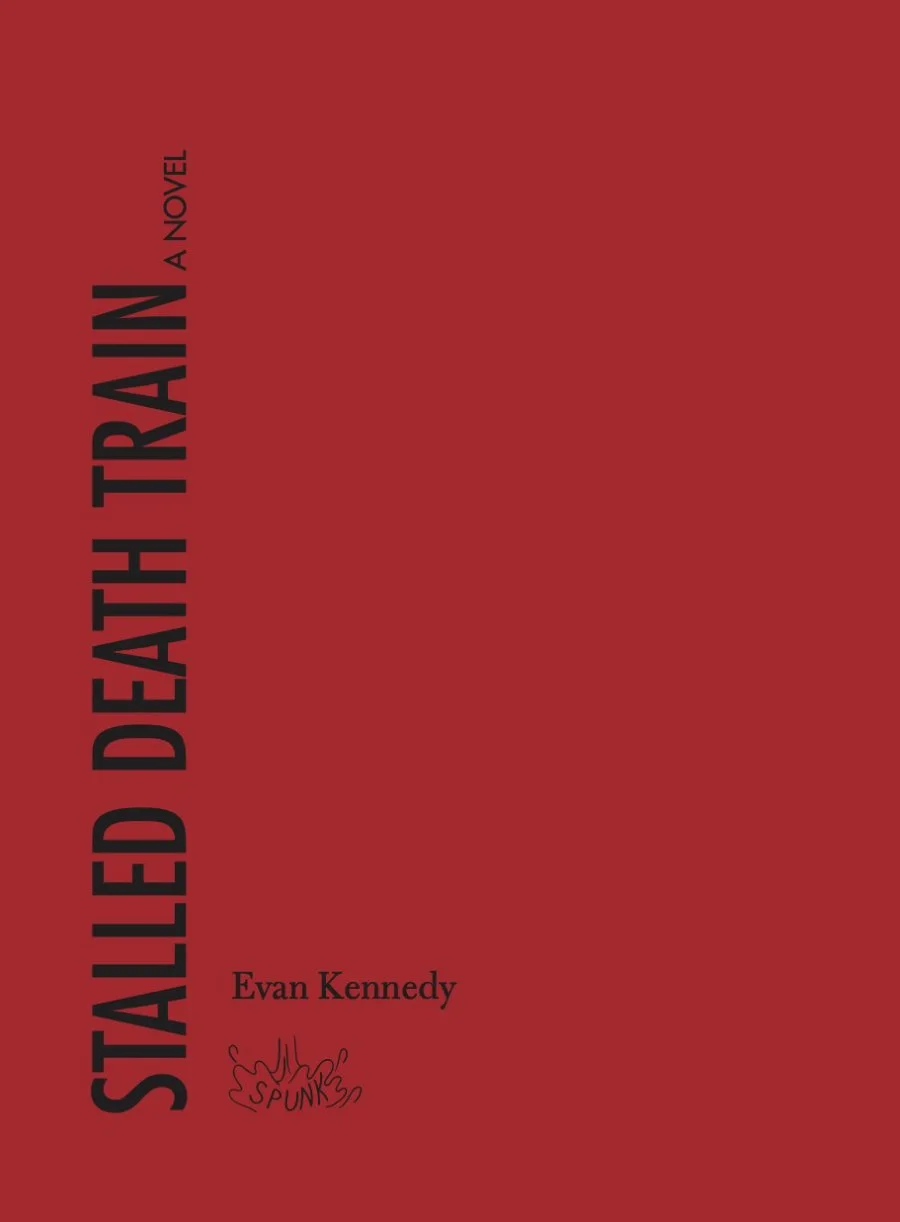
Evan Kennedy and Noah Ross are both poets living in the Bay Area, and they recently met at the Oakland Public Library’s 2nd floor Zenbooth to discuss Stalled Death Train, Evan’s novel about David Bowie and android companions, published by Spunk Editions, the queer press recently established by Noah and fellow poet Eric Sneathen.
Stalled Death Train is a dark-humored poet’s novel of gay cruising and database crawling. In the aftermath of David Bowie’s death, Nick, a burned out office worker and Bowie fanatic, deciphers the legacy and lyrics of his pop icon whose excesses did not cease, even after the heights of his fame had passed. Meanwhile, Nick must solve the mystery of why his android boyfriend has begun to self-amputate in an attempt to upgrade himself.
Stalled Death Train can be ordered via Asterism and Spunk Editions.
Noah Ross: Hi Evan. I was hoping to start with the most basic question. There are so many ways to describe Stalled Death Train, right? It’s a poet’s novel; a dystopian, robot romance; a fan’s deep dive into David Bowie’s late career; a stark look at queer loneliness. How do you describe it?
Evan Kennedy: I should start with David Bowie. There’s a meme going around saying that everything went to shit when David Bowie died in January 2016.
I don’t believe that’s the case. I don’t believe he was this cosmic force whose death ushered in a deteriorated age. That said, there was a buffer that I established through his songs between myself and the world, and I did want to transform my grief over Bowie’s death and that feeling of alienation and frustration with what all began in 2016. I wanted to accommodate that darkness.
Bowie’s creative approach is core to my writing. He’s a pastiche artist, uniting different styles and genres. In that spirit, I wanted to write into genres that were new to me: music journalism and sex writing, which turned out to involve an android.
NR: I wanna run with that for a second, because I love how maybe genre channels you, or you’re propelled by genre. I feel that, too. And there’s quite a few genres we’re working with here. In friendship and in poetry community with you, we often talk about what we’re reading. What research did you do?
EK: I read a lot of the recent books about Bowie and his creative process: Chris O’Leary’s Pushing Ahead of the Dame and Dylan Jones’s David Bowie: A Life. I’m also interested in late style, artists’ last works. How can I plot a creative life from when I started scribbling stuff as a kid to the very end, whenever that might be? The late style is a summation of all one’s previous styles, but also has something ineffable or authoritative about it, whether it’s Strauss’s Four Last Songs or Schubert’s last piano sonatas or Bowie’s Blackstar.
NR: What gave you ideas about genres that you wanted to write in?
EK: For the science fiction angle about robot companions, you gave me that great book, Dating AI by Alex Zhavoronkoff, which was speculative insofar as the technology hasn’t advanced as far but presumed that robot companions were our reality. I also read oral histories of the AIDS epidemic for the viral narrative about a disease that impacts men who have robot boyfriends and the phones the guys use to communicate with them. A virus that could leap between technology and humans didn’t sound so far-fetched.
I confess I also read Drudge Report, the news aggregate that was somewhat right leaning but is now more centrist. Drudge will fixate on lifestyle stories or human oddity stories that fall outside day-to-day events. He’d been linking to articles about sex bots, and a long time ago, he’d feature stories about people who disassociated from different parts of their bodies, legs and arms.
There’s also the genre of poet’s novel, which helped me make the leap from writing poetry all my life to putting slabs of prose down onto paper. I read Eileen Myles’s Inferno, Brandon Brown’s The Tragicall History, Kevin Killian’s Fascination, Pamela Lu’s Pamela, Camille Roy’s Honey Mine.
All my work is written in dialog with other poets in the Bay Area.
NR: I’m thinking of the poet novels that have emerged in Bay Area scenes, especially through New Narrative and the lineage of gay and largely queer writing. We’ve got Bob Glück, Kevin Killian...
EK: The epistolary part was lifted from Dodie Bellamy’s The Letters of Mina Harker. The gossip and candid talk about sex and writing community can all be traced to New Narrative...and the gossip we’re doing today!
NR: Stalled Death Train was in progress for a long time. We’ve spoken about it for 7 or 8 years. I’d love to hear about your thinking as the book developed.
EK: Well, it started out as a kind of collaboration between me and a friend. Around 2017, we decided to each write a book based on a David Bowie album. By the time I had the basic idea for this novel based on Blackstar, this friend had other commitments, so he had to drop out.
So I began writing something that I wouldn’t have set out to do on my own. And that did require learning how to write differently, or ventriloquize those genres through my writing, but it was also liberating. I took on topics I wouldn’t have otherwise chosen for myself. To paraphrase Bowie, I walked into the water until it was lapping at my nostrils. By doing that, things started getting interesting.
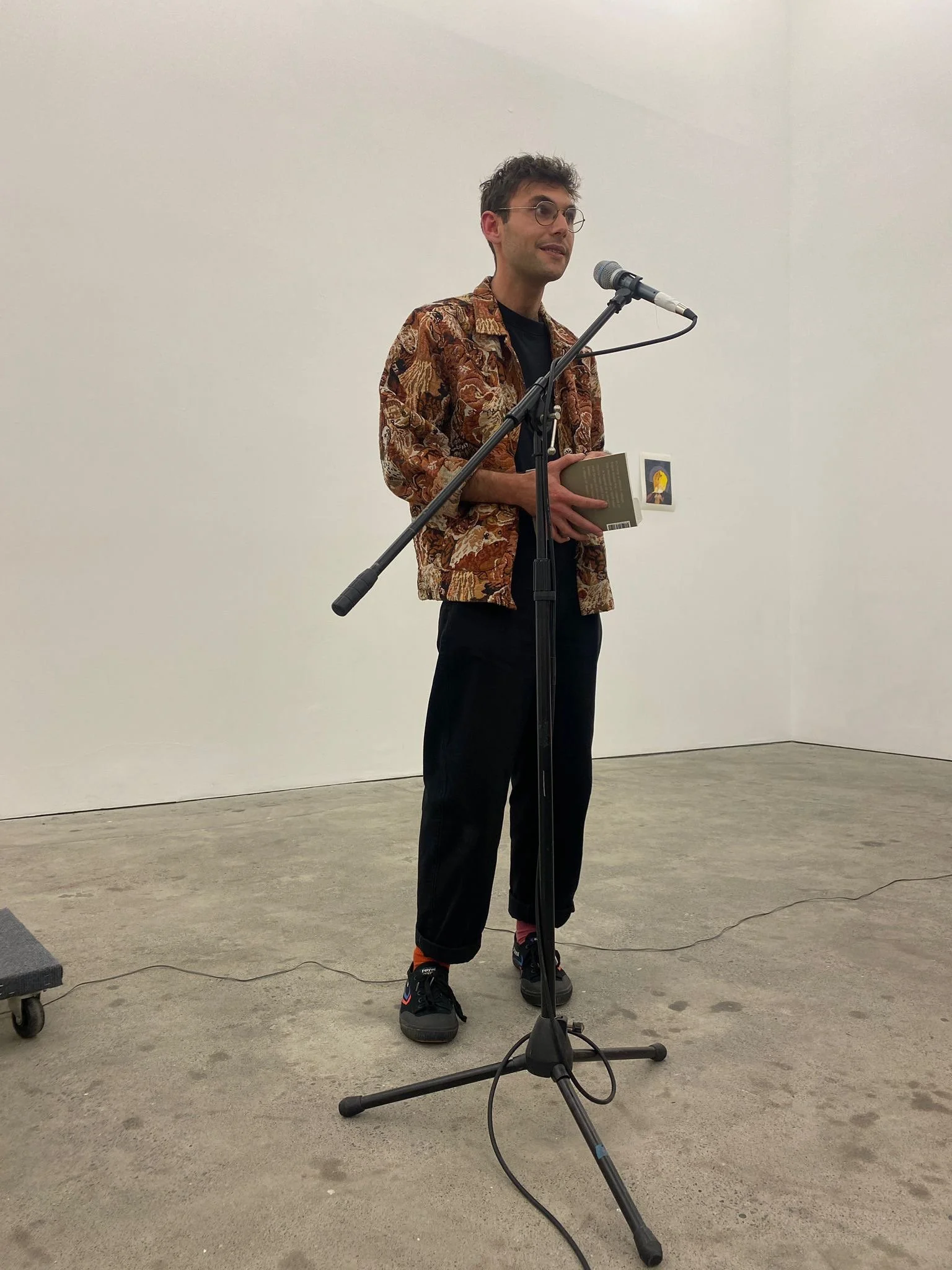
I tested the work at readings. They were generally attended by the poets, and I’m reading pretty outré stuff. These were at places like Wolfman Books (now closed but reopened in a sense as Bathers Library) and Woolsey Heights, a house reading series in Berkeley. Giving readings offers the best opportunity to prepare work and test it out and get feedback, or at least a response. Even if they’re walking out like they did at Moe’s Books!
One of our friends told me it gave her nightmares. I was surprised by the different sort of response it got compared to poetry. The writing felt much more immediate and visceral. And I was trying to amp up the sexuality and queer isolation.
NR: I remember being in the audience for these readings and feeling like the work was really electric, partly because of what prose can do. And that takes us to around 2020, just before the pandemic.
EK: I had a draft, so you saw two, maybe three complete manuscripts before starting Spunk Editions.
NR: I remember we were talking about what it was like to publish a poet’s novel and how different it was to dip into a prose landscape and think about maybe even agents or different kinds of editors and approaches than what we were used to.
EK: Yeah, but I also wasn’t interested in making many compromises with the writing. I wanted the book to be legible but freaky and engaging, but also at the same time, I was taking a risk by combining rock journalism with...robot pornography.
NR: Totally, totally. Do you think of it as a kind of hybrid text, to use maybe an overplayed word?
EK: Oh yeah. Just as Nick, the protagonist, designs his robot’s body from elements he finds appealing—the chest of an ex-boyfriend, the eyes of a celebrity crush—it’s a hybrid text pulling from disparate genres.
NR: If you look at how so many of the New Narrative folks were publishing each other, keeping it local, there was precedent to do that. Like how Bruce Boone’s and Bob Glück’s La Fontaine and Bruce’s My Walk with Bob were self-published by, coincidentally enough, Black Star. And how they published their friend Steve Abbott’s Lives of the Poets.
EK: I wasn’t sure what direction to try to take. I sat on the manuscript for a while, then you approached me to see the latest version in...2023?
NR: Yeah.EK: You had a solid lineage out of which to start Spunk Editions.
NR: Right. My co-publisher, Eric Sneathen, was coming from Dogpark Collective, a great local press. I was closing up Baest, an online queer poetry journal. We wanted to publish local queer authors, and we wanted physical books. At that point, everyone was sick of the internet.
EK: I was definitely sick of reading poems on the internet.
NR: I had a job at a mid-size commercial press getting books reprinted, and it was really fun. Eric and I are print fetishists. So the question that followed was, what do we want to print? And it was Stalled Death Train. And the editorial process took us somewhere I couldn’t have foreseen. We had so much fun.
EK: Yeah, we must have discussed it for a good two years, meeting regularly, going over chapters.
NR: You worked a lot on the manuscript, and we were able to think together about your dreams and desires here.
EK: I was incredibly fortunate to have you both as editors and encouragers and readers. The book started out as a novel of queer isolation then deepened our friendship. The entire editorial and publishing process was life-affirming for me.
NR: Likewise. For me, it was like getting training wheels for becoming an editor. And I hope it made the book what it is today.
EK: It fucking transformed it definitely. We had fun. And we honored the Bay Area and our elders. Now what’s next for Spunk?
NR: Coming out at the end of February is a collaborative work by Rainer Diana Hamilton and Violet Spurlock, This Reasonable Habit. It follows a pseudo-academic poetry conference and a cast of characters moving through various panels, screenings, and conversations taking place all the way from Berkeley to Montreal. It’s a hoot. Those two are great friends and my icons, so I’m excited to share more about that with everyone soon.
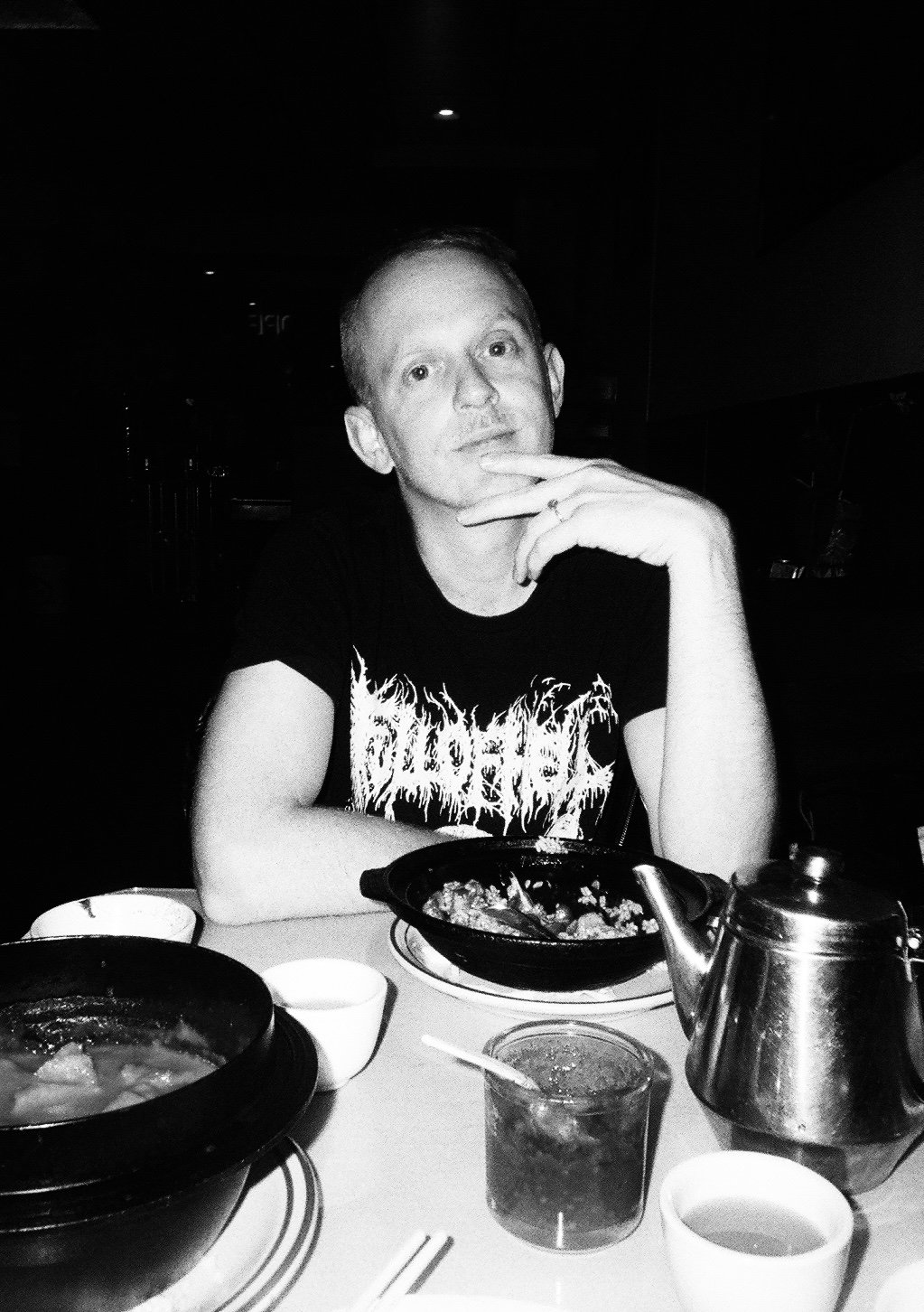
Evan Kennedy is a poet and bicyclist living in “San Francisco, California.” He is the author of Stalled Death Train (Spunk Editions), Metamorphoses (City Lights), and other books.
Noah Ross is a poet in the East Bay whose recent works include The Holy Grail (Wry Press, 2025), The Dogs (Krupskaya, 2024), and Active Reception (Nightboat Books, 2021). With Eric Sneathen, Noah edits SPUNK Editions.